Diese Webseite verwendet Cookies
Wir verwenden Cookies, um Inhalte und Anzeigen zu personalisieren, Funktionen für soziale Medien anbieten zu können und die Zugriffe auf unsere Website zu analysieren. Außerdem geben wir Informationen zu Ihrer Verwendung unserer Website an unsere Partner für soziale Medien, Werbung und Analysen weiter. Unsere Partner führen diese Informationen möglicherweise mit weiteren Daten zusammen, die Sie ihnen bereitgestellt haben oder die sie im Rahmen Ihrer Nutzung der Dienste gesammelt haben.
Einwilligungsauswahl
Details
  • Notwendige Cookies helfen dabei, eine Webseite nutzbar zu machen, indem sie Grundfunktionen wie Seitennavigation und Zugriff auf sichere Bereiche der Webseite ermöglichen. Die Webseite kann ohne diese Cookies nicht richtig funktionieren.
    • Erfahren Sie mehr über diesen Anbieteröffnet in einem neuen Fenster
      CookieConsentSpeichert den Zustimmungsstatus des Benutzers für Cookies auf der aktuellen Domäne.
      Maximale Speicherdauer: 1 JahrTyp: HTTP-Cookie
    • Erfahren Sie mehr über diesen Anbieteröffnet in einem neuen Fenster

      Ein Teil der von diesem Anbieter erhobenen Daten dient der Personalisierung sowie der Messung der Werbewirksamkeit. Der Anbieter kann IP-Adressen für die Erfolgsmessung und Personalisierung von Werbung nutzen.

      test_cookieVerwendet, um zu überprüfen, ob der Browser des Benutzers Cookies unterstützt.
      Maximale Speicherdauer: 1 TagTyp: HTTP-Cookie
    • Erfahren Sie mehr über diesen Anbieteröffnet in einem neuen Fenster
      __cf_bmDieser Cookie wird verwendet, um zwischen Menschen und Bots zu unterscheiden. Dies ist vorteilhaft für die Website, um gültige Berichte über die Nutzung Ihrer Website zu erstellen.
      Maximale Speicherdauer: 1 TagTyp: HTTP-Cookie
      cf_clearanceDieser Cookie wird verwendet, um zwischen Menschen und Bots zu unterscheiden.
      Maximale Speicherdauer: 1 JahrTyp: HTTP-Cookie
  • Präferenz-Cookies ermöglichen einer Webseite sich an Informationen zu erinnern, die die Art beeinflussen, wie sich eine Webseite verhält oder aussieht, wie z. B. Ihre bevorzugte Sprache oder die Region in der Sie sich befinden.
    • Wir nutzen diese Cookie-Typen nicht.

  • Statistik-Cookies helfen Webseiten-Besitzern zu verstehen, wie Besucher mit Webseiten interagieren, indem Informationen anonym gesammelt und gemeldet werden.
    • Erfahren Sie mehr über diesen Anbieteröffnet in einem neuen Fenster
      p.gifVerfolgt spezielle Schriftarten, die auf der Website für interne Analysen verwendet werden. Der Cookie registriert keine Besucherdaten.
      Maximale Speicherdauer: SitzungTyp: Pixel-Tracker
    • Erfahren Sie mehr über diesen Anbieteröffnet in einem neuen Fenster
      c.gifSammelt Daten über die Navigation und das Verhalten des Benutzers auf der Website - Daraus werden statistische Berichte und Heatmaps für den Website-Besitzer erstellt.
      Maximale Speicherdauer: SitzungTyp: Pixel-Tracker
      _clsk [x2]Registriert statistische Daten über das Verhalten der Besucher auf der Website. Wird vom Website-Betreiber für internes Analytics verwendet.
      Maximale Speicherdauer: SitzungTyp: HTTP-Cookie
      _clckSammelt Daten über die Navigation und das Verhalten des Benutzers auf der Website - Daraus werden statistische Berichte und Heatmaps für den Website-Besitzer erstellt.
      Maximale Speicherdauer: 1 JahrTyp: HTTP-Cookie
      _cltkRegistriert statistische Daten über das Verhalten der Besucher auf der Website. Wird vom Website-Betreiber für internes Analytics verwendet.
      Maximale Speicherdauer: SitzungTyp: HTML Local Storage
  • Marketing-Cookies werden verwendet, um Besuchern auf Webseiten zu folgen. Die Absicht ist, Anzeigen zu zeigen, die relevant und ansprechend für den einzelnen Benutzer sind und daher wertvoller für Publisher und werbetreibende Drittparteien sind.
    • Erfahren Sie mehr über diesen Anbieteröffnet in einem neuen Fenster

      Ein Teil der von diesem Anbieter erhobenen Daten dient der Personalisierung sowie der Messung der Werbewirksamkeit. Der Anbieter kann IP-Adressen für die Erfolgsmessung und Personalisierung von Werbung nutzen.

      pagead/1p-user-list/#Wird verwendet, um zu tracken, ob der Besucher Interesse an bestimmten Produkten oder Ereignissen auf mehreren Websites gezeigt hat und wie der Besucher zwischen den Websites navigiert - Dies wird zur Messung des Werbeaufwands verwendet und erleichtert die Zahlung von Empfehlungsgebühren zwischen Websites.
      Maximale Speicherdauer: SitzungTyp: Pixel-Tracker
      _gaWird verwendet, um Daten zu Google Analytics über das Gerät und das Verhalten des Besuchers zu senden. Erfasst den Besucher über Geräte und Marketingkanäle hinweg.
      Maximale Speicherdauer: 2 JahreTyp: HTTP-Cookie
      _ga_#Wird verwendet, um Daten zu Google Analytics über das Gerät und das Verhalten des Besuchers zu senden. Erfasst den Besucher über Geräte und Marketingkanäle hinweg.
      Maximale Speicherdauer: 2 JahreTyp: HTTP-Cookie
      _gcl_auWird verwendet, um die Effizienz der Werbeaktivitäten der Website zu messen, indem Daten über die Conversion-Rate der Anzeigen der Website über mehrere Websites hinweg gesammelt werden.
      Maximale Speicherdauer: 3 MonateTyp: HTTP-Cookie
      _gcl_lsVerfolgt die Konversionsrate zwischen dem Nutzer und den Werbebannern auf der Website - Dies dient der Optimierung der Relevanz der Werbung auf der Website.
      Maximale Speicherdauer: BeständigTyp: HTML Local Storage
    • Erfahren Sie mehr über diesen Anbieteröffnet in einem neuen Fenster
      MR [x2]Wird verwendet, um Besucher auf mehreren Websites zu tracken, um relevante Werbung basierend auf den Präferenzen des Besuchers zu präsentieren.
      Maximale Speicherdauer: 7 TageTyp: HTTP-Cookie
      MUID [x2]Weitgehend von Microsoft als eindeutige Benutzer-ID verwendet. Der Cookie ermöglicht Benutzer-Tracking durch Synchronisieren der ID in vielen Microsoft-Domänen.
      Maximale Speicherdauer: 1 JahrTyp: HTTP-Cookie
      SRM_BWird verwendet, um die Interaktion des Benutzers mit der Suchleistenfunktion der Website zu verfolgen. Diese Daten können verwendet werden, um dem Benutzer relevante Produkte oder Dienstleistungen anzubieten.
      Maximale Speicherdauer: 1 JahrTyp: HTTP-Cookie
      ANONCHKRegistriert Daten über Besucher von mehreren Besuchen und auf mehreren Websites. Diese Informationen werden verwendet, um die Werbewirkung auf Websites zu messen.
      Maximale Speicherdauer: 1 TagTyp: HTTP-Cookie
      SMRegistriert eine eindeutige ID, die das Gerät des Benutzers während der erneuten Besuche auf Websites identifiziert, die das gleiche Anzeige-Netzwerk verwenden. Die ID wird für die Ermöglichung gezielter Werbung genutzt.
      Maximale Speicherdauer: SitzungTyp: HTTP-Cookie
    • Erfahren Sie mehr über diesen Anbieteröffnet in einem neuen Fenster
      __cf_obAnstehend
      Maximale Speicherdauer: SitzungTyp: HTTP-Cookie
      _cfPre_tabIdAnstehend
      Maximale Speicherdauer: SitzungTyp: HTML Local Storage
    • Erfahren Sie mehr über diesen Anbieteröffnet in einem neuen Fenster
      __Secure-ROLLOUT_TOKENWird verwendet, um die Interaktion der Nutzer mit eingebetteten Inhalten zu verfolgen.
      Maximale Speicherdauer: 180 TageTyp: HTTP-Cookie
      __Secure-YECSpeichert die Benutzereinstellungen beim Abruf eines auf anderen Webseiten integrierten Youtube-Videos
      Maximale Speicherdauer: SitzungTyp: HTTP-Cookie
      __Secure-YNIDWird verwendet, um die Interaktion der Nutzer mit eingebetteten Inhalten zu verfolgen.
      Maximale Speicherdauer: 180 TageTyp: HTTP-Cookie
      LAST_RESULT_ENTRY_KEYWird verwendet, um die Interaktion der Nutzer mit eingebetteten Inhalten zu verfolgen.
      Maximale Speicherdauer: SitzungTyp: HTTP-Cookie
      LogsDatabaseV2:V#||LogsRequestsStoreWird verwendet, um die Interaktion der Nutzer mit eingebetteten Inhalten zu verfolgen.
      Maximale Speicherdauer: BeständigTyp: IndexedDB
      ServiceWorkerLogsDatabase#SWHealthLogNotwendig für die Implementierung und Funktionalität von YouTube-Videoinhalten auf der Website.
      Maximale Speicherdauer: BeständigTyp: IndexedDB
      TESTCOOKIESENABLEDWird verwendet, um die Interaktion der Nutzer mit eingebetteten Inhalten zu verfolgen.
      Maximale Speicherdauer: 1 TagTyp: HTTP-Cookie
      VISITOR_INFO1_LIVEVersucht, die Benutzerbandbreite auf Seiten mit integrierten YouTube-Videos zu schätzen.
      Maximale Speicherdauer: 180 TageTyp: HTTP-Cookie
      YSCRegistriert eine eindeutige ID, um Statistiken der Videos von YouTube, die der Benutzer gesehen hat, zu behalten.
      Maximale Speicherdauer: SitzungTyp: HTTP-Cookie
      yt-icons-last-purgedNotwendig für die Implementierung und Funktionalität von YouTube-Videoinhalten auf der Website.
      Maximale Speicherdauer: BeständigTyp: HTML Local Storage
      ytidb::LAST_RESULT_ENTRY_KEYWird verwendet, um die Interaktion der Nutzer mit eingebetteten Inhalten zu verfolgen.
      Maximale Speicherdauer: BeständigTyp: HTML Local Storage
      YtIdbMeta#databasesWird verwendet, um die Interaktion der Nutzer mit eingebetteten Inhalten zu verfolgen.
      Maximale Speicherdauer: BeständigTyp: IndexedDB
  • Nicht klassifizierte Cookies sind Cookies, die wir gerade versuchen zu klassifizieren, zusammen mit Anbietern von individuellen Cookies.
    • matrix_last_commercial_productAnstehend
      Maximale Speicherdauer: SitzungTyp: HTML Local Storage
Die Cookie-Erklärung wurde das letzte Mal am 9/30/26 von Cookiebot aktualisiert
[#IABV2_TITLE#]
[#IABV2_BODY_INTRO#]
[#IABV2_BODY_LEGITIMATE_INTEREST_INTRO#]
[#IABV2_BODY_PREFERENCE_INTRO#]
[#IABV2_BODY_PURPOSES_INTRO#]
[#IABV2_BODY_PURPOSES#]
[#IABV2_BODY_FEATURES_INTRO#]
[#IABV2_BODY_FEATURES#]
[#IABV2_BODY_PARTNERS_INTRO#]
[#IABV2_BODY_PARTNERS#]
Über Cookies
Cookies sind kleine Textdateien, die von Webseiten verwendet werden, um die Benutzererfahrung effizienter zu gestalten.

Laut Gesetz können wir Cookies auf Ihrem Gerät speichern, wenn diese für den Betrieb dieser Seite unbedingt notwendig sind. Für alle anderen Cookie-Typen benötigen wir Ihre Erlaubnis.

Diese Seite verwendet unterschiedliche Cookie-Typen. Einige Cookies werden von Drittparteien platziert, die auf unseren Seiten erscheinen.

Sie können Ihre Einwilligung jederzeit von der Cookie-Erklärung auf unserer Website ändern oder widerrufen.

Erfahren Sie in unserer Datenschutzrichtlinie mehr darüber, wer wir sind, wie Sie uns kontaktieren können und wie wir personenbezogene Daten verarbeiten.

Bitte geben Sie Ihre Einwilligungs-ID und das Datum an, wenn Sie uns bezüglich Ihrer Einwilligung kontaktieren.
28 June 2022

How to Use Bluetooth FTMS to Enhance Your Workout

In the fitness world, some things never change.

For those looking to improve their health and fitness, train for an event, or just get a bit more active, home fitness equipment has been a staple for decades.

And while the concept of treadmills, exercise bikes, or ellipticals may not be new, there are some great technologies out there that have helped bring the entire fitness experience to an entirely new level.

Bluetooth is something we’re all familiar with by now, from connecting our phones to our cars and connecting our headphones to our mobile devices, to pairing our bike trainers or heart rate straps for fitness.

What makes Bluetooth so useful in our daily lives is its universality. Phones made by any number of different manufacturers can pair with any automobile make, model and manufacturer and you can expect a similar experience.

Why? Because there is a common language, or protocol, that all these groups have agreed upon to facilitate the automobile to phone connection.
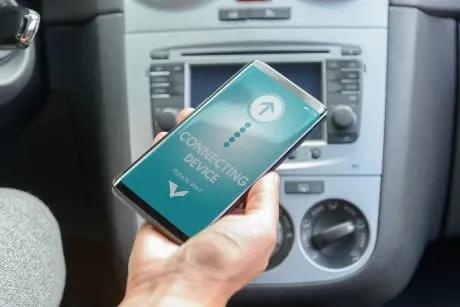
connecting device on phone

What is Bluetooth FTMS?

For the fitness equipment industry, that protocol is called FTMS. FTMS stands for Fitness Machine Service and it’s quickly becoming the gold standard for fitness apps.

With FTMS, you’ll be able to make your workouts more social, more engaging and if you choose, more competitive. There are many great fitness apps out there such as Zwift, Kinomap and RGT Cycling by Wahoo that take advantage of this technology to help deliver a fun and more motivating workout experience.

Depending on what you want to get out of fitness and what your preferences are for how you work out, there will be an opportunity for FTMS technology to help elevate your workout if you own equipment with Bluetooth FTMS technology.

If you enjoy exercising socially and struggle to work out in your own home, connecting your equipment with one of these apps lets you engage with others in real time, sharing in your struggles and successes along the way, all from your own home. For the competitors, being able to get onto your machine and fire up a race against friends and strangers around the globe can be a huge motivator.

One of the additional benefits of these apps and the Bluetooth technology driving it is that there are constant improvements and updates to help keep your workouts exciting and engaging.

As a product manager at Matrix Fitness for our console technology, I’m very aware of how important it is to keep the experience fresh and exciting for our customers. I’m proud of our team’s efforts on our consoles to create the best workout experience for our customers but incorporating the FTMS protocol helps supercharge that experience.
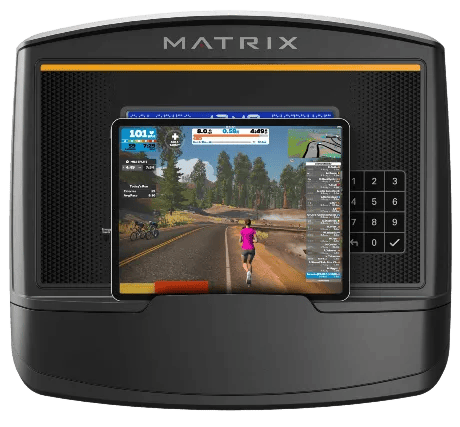
LED console

For LED consoles such as the Matrix XR console, our options to update the console experience in the future will be limited, but by connecting to one of the myriad apps out there, you can create a touch screen (by using your own tablet or phone), fully connected workout on what would otherwise be a low-tech console experience.

For more advanced consoles such as our XER, XIR, XUR touchscreens, we have many fun and engaging built-in workout apps and options, but the FTMS apps can add a new level of social and competitive fun to the overall workout when connected to the consoles.

Why Bluetooth FTMS?

Prior to the Bluetooth FTMS protocol, there were a handful of different fitness protocols in use that each addressed a different part of the fitness experience. For example, you could have an app that would share heart rate but not provide any data about your speed. Or on a bike trainer, you could track your speed and cadence, but not information about heart rate or incline.

Some companies even made their own proprietary Bluetooth protocols on their equipment. This approach worked for years as users committed to just one exercise type, such as only biking. However, it creates a lot of frustration for the cyclist who wants to start triathlon training and quickly learns that the apps and hardware they used for bike training don’t work on their treadmill.

It goes back to the automobile industry example. If you had to check before you bought a new whether your current device would still work, it would be more of a headache than a benefit.

To help solve this problem, the FTMS protocol was developed. Unlike some of the other options out there, FTMS will support your fitness experience regardless of what type of equipment it is. It will support treadmills, exercise bikes, ellipticals and, climbers, which makes it the best solution as we step into the future with connected experiences on fitness equipment.

What about the older apps?

There are many fitness apps that have been around for years and have used other protocols to create a fantastic experience for exercisers. What we’ve seen in the last few years is that many fitness apps are updating their own apps to be compatible with FTMS, which will make things easier for you to find apps to connect with your equipment and vice versa.

There are still a few holdouts in the industry that are using older Bluetooth protocols, but most fitness apps are already using FTMS, and the last few are likely headed that way as well.
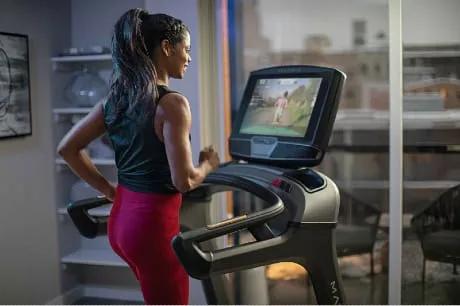
women running on treadmill

What does this mean for my own fitness equipment?

If you already have fitness equipment with Bluetooth, great! Hopefully it already supports FTMS, to allow you the greatest freedom when finding a fun and entertaining fitness app to pair with.

If you’re in the market for new fitness equipment, be sure to check to make sure that it’s Bluetooth FTMS compatible. It will give you much more flexibility in your fitness experience over the life of your product.

It’s important to make sure that the Bluetooth is FTMS, because there are some products that will advertise Bluetooth and support headphones or heart rate monitors, but not app connectivity. And while it’s possible those products may add that support down the road, it’s a risk if you get a product without it.

What FTMS features are supported by Matrix home equipment?

On Matrix equipment, many types of machine data are sent from the equipment to your mobile app. The chart below outlines all the data that Matrix equipment can send to your app for a great fitness experience.
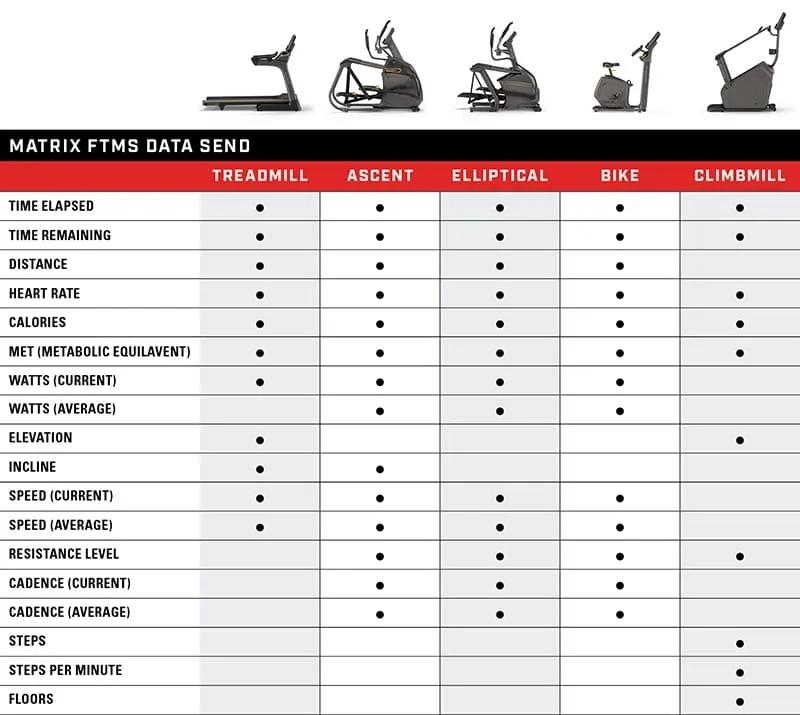
FTMS data chart

Why am I not able to use all the functions?

For FTMS to work completely, both the equipment and the app need to be using the same data. You’ll find that while Matrix may pass a large breadth of information to the app, it’s possible that the app does not use it all. Sometimes this is because certain information isn’t needed to create the desired experience for the app, but in other cases it may be that the app is not fully FTMS compliant or lacking certain functions.

How do I connect my Matrix equipment to an app via Bluetooth FTMS?

Connecting your Matrix equipment to a training app via Bluetooth FTMS is easy. Remember that Bluetooth FTMS is only available on the second-generation consoles. Our tutorial videos demonstrate how to connect Matrix consoles to Zwift.

Watch: How to Pair XR-02 Console

Watch: How to Pair XUR / XER-02 / XIR-02 Consoles

What’s next with FTMS?

Now that many apps and fitness products in the industry have adopted FTMS as the standard Bluetooth for fitness, it’s going to be exciting to see how they use the protocol to its fullest compatibility.

One of the great features that is gaining traction is the FTMS control feature. This helps take the app experience to the next level by letting your mobile device and the workout app take control of the fitness equipment.

If you’re on a race course in your app, you may feel the resistance on your bike or elliptical increase or decrease to match the course, or feel your treadmill incline go up or down, the belt move faster or slower, in time with the workout that is being led by your fitness app.

On Matrix equipment, we look forward to adding the control capability in the near future as more apps start to take advantage of it.

Letting your phone or tablet become part of your workout experience is a great enhancement since it will keep your workout fresh with constant updates. And with new fitness apps always on the horizon, you’ll have more and more options to maximize your entire fitness experience.

Bluetooth FTMS helps drive that experience and pairing it with a great piece of fitness equipment will keep you motivated and entertained for years to come as your fitness goals and workout preferences change.


About the Author

Aaron Raulin, Matrix Product Manager - Technology

Aaron has been in the fitness industry for 15 years. He started in customer service, working directly with equipment owners to identify and resolve problems with their equipment. For the last 10 years, he has been working in product management, developing solutions for the home and for large facilities, supporting many products that are in use around the globe today. His primary focus has been console technology, creating positive experiences for users on their fitness equipment consoles and incorporating the newest technology into fitness equipment.

aaron raulin


Disclaimer: This blog post is for informational and educational purposes only and does not substitute for professional medical advice. The above information should not be used to diagnose, treat or prevent any disease or medical condition. Seek the advice of your health care provider before making changes to your diet, daily activity, sleep or fitness routine and any questions you may have regarding your health or a medical condition. Matrix Fitness assumes no responsibility for any personal injury or damage sustained by any recommendations, opinions or advice given in this article. Always follow the safety precautions included in the owner's manual of your fitness equipment.